
“We draw our strength from the very despair in which we have been forced to live. We shall endure.” – Cesar Chavez
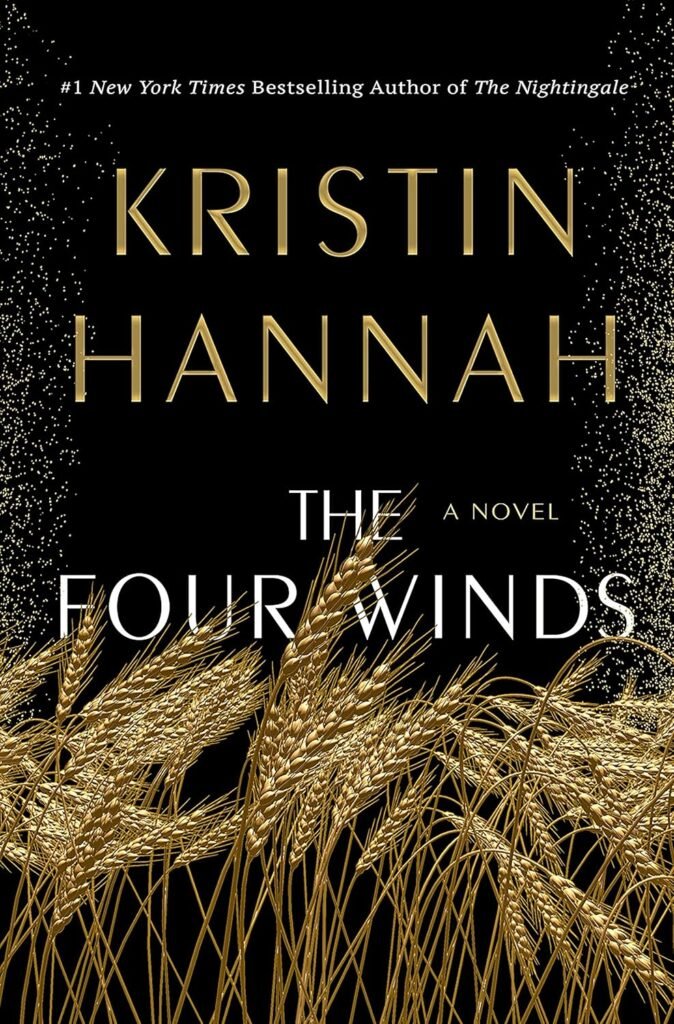
It starts with a book and a red silk dress…two of my favorite things!
We meet twenty-five year old Elsinore, ‘Elsa,’ the spinster daughter of the well-to-do Wolcott family. Elsa was sick as a child, always considered frail and not encouraged to live her life, and she is forced into a sheltered existence finding adventure and dreams only in her books. Her mother cruelly has Elsa believing she is unattractive her whole life (we never get to the bottom of that except I suspect ol’ Mommy Dearest wanted someone at home to take care of her in her old age). No boyfriends, no courting, all hopes dashed for romance and leaving home and having a family of her own. Elsa believes this malarky and so begins the decision that is the catalyst for the novel.
Elsa works up the nerve to ask to go to college in Chicago and is laughed at by her family and told to go to her room. Elsa’s dreams of love, spurred by The Age of Innocence and Memoirs of a Woman of Pleasure, encourage her to ‘be brave’ – a running theme of the book. The year is 1921, and Elsa decides to take matters into her own hands by cutting her hair in the style of the flappers of the day, much to her parents’ shock and horror. While shopping in town, she purchases a bolt of red silk that the shopkeeper intended for her sisters and makes herself a short-skirted, low cut flapper-style dress and sneaks herself and her new hair cut out of the house to experience life. Of course, she meets a boy, eighteen year old Rafe Martinelli. Caught up in her dreams of love, the two meet secretly until the inevitable happens – Elsa is expecting a baby. It doesn’t take Elsa’s mother long to figure it out, and Elsa’s father forces her to pack a few belongings and he takes her and dumps her unceremoniously at the home of Rafe’s family. Elsa can only grab a few novels, notably and with great foreshadowing leaving behind The Age of Innocence…
Rafe and Elsa marry quietly, and Elsa throws herself into life on their farm, desperate to finally earn the love she feels undeserving of, doing any task or chore to ingratiate herself to Rafe’s family so that they will love her and her child. Elsa is a lady, used to embroidery and reading and wearing fine things – she has to learn to cook and clean and help out on the farm. She has also married into a family foreign to her both in heritage and traditions – Elsa converts to Catholicism, adopts the family’s traditions, and learns to cook and appreciate Italian foods. Our Elsa is determined, however, and she learns quickly. Her efforts pay off as far as Rafe’s parents, Tony and Rosa, are concerned, but Rafe never settles into married life. His dreams are far away, in the land of milk and honey called California, but Elsa is tied to the farm, not willing to leave the one place she has finally found belonging and love.
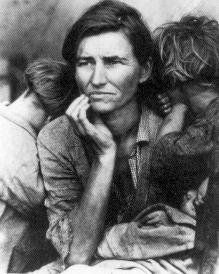
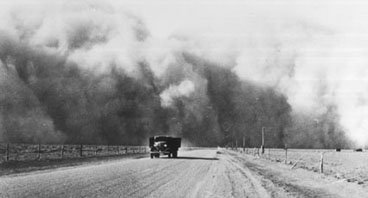
(Photographic images are from the US Department of Agriculture archives)
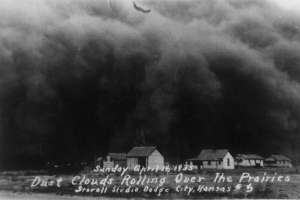
By 1934, the hard times have come. The stock market crash of 1929 has led to the Great Depression and the Great Plains of the United States, including Elsa’s north Texas home of Lonesome Tree, are years into a ten year drought that will devastate the land and the people. Two children later, Lareda and Anthony, Elsa finally has the family she has dreamed of but not the love of a good man. Rafe drinks too much, stays away from home, and basically amounts to not a whole lot, but he does love his children and he and Lareda are especially close, Lareda sharing Rafe’s dreams of an exciting life far away in California. As the family struggles to maintain their home in the midst of despair, Elsa battles with a pre-teen Lareda and the environmental conditions that are slowing killing life as they know it. Gigantic windstorms sweep the plains, blowing dirt on top of dirt into homes, into eyes and lungs, and into the bellies of livestock who are already dropping dead from thirst and starvation. (To put this into perspective, more than 800 million tons of topsoil blew away in a single year during the Dust Bowl.) The family has gas masks and wet sponges they use to cover their faces when the storms come, hiding under a table covered by dampened sheets to help keep out the dirt. Nothing helps, however, and the family has become accustomed to endlessly sweeping dirt, using precious well water to try to keep farm animals alive, watering what few things they are able to plant, never quite being clean, and having very little food for themselves. Elsa and her inlaws suffer through, but Rafe can’t take it. He tries and fails to convince Elsa to leave and go to California. Her argument against it is valid – there’s no money for gas, the children don’t have shoes to walk it on foot as many people are, they aren’t agile and old enough to navigate jumping trains, and how could they possibly leave his parents behind? As you might have guessed, Elsa wakes up the next morning, Rafe is gone. Elsa and the children and Rafe’s parents are stunned and distraught, especially Lareda who blames Elsa. The family struggles through the betrayal as devastation mounts around them, and when crisis happens in the family, Elsa is forced to make the choice to head to California herself, hoping California lives up to the hype. I’m sad to say it doesn’t…
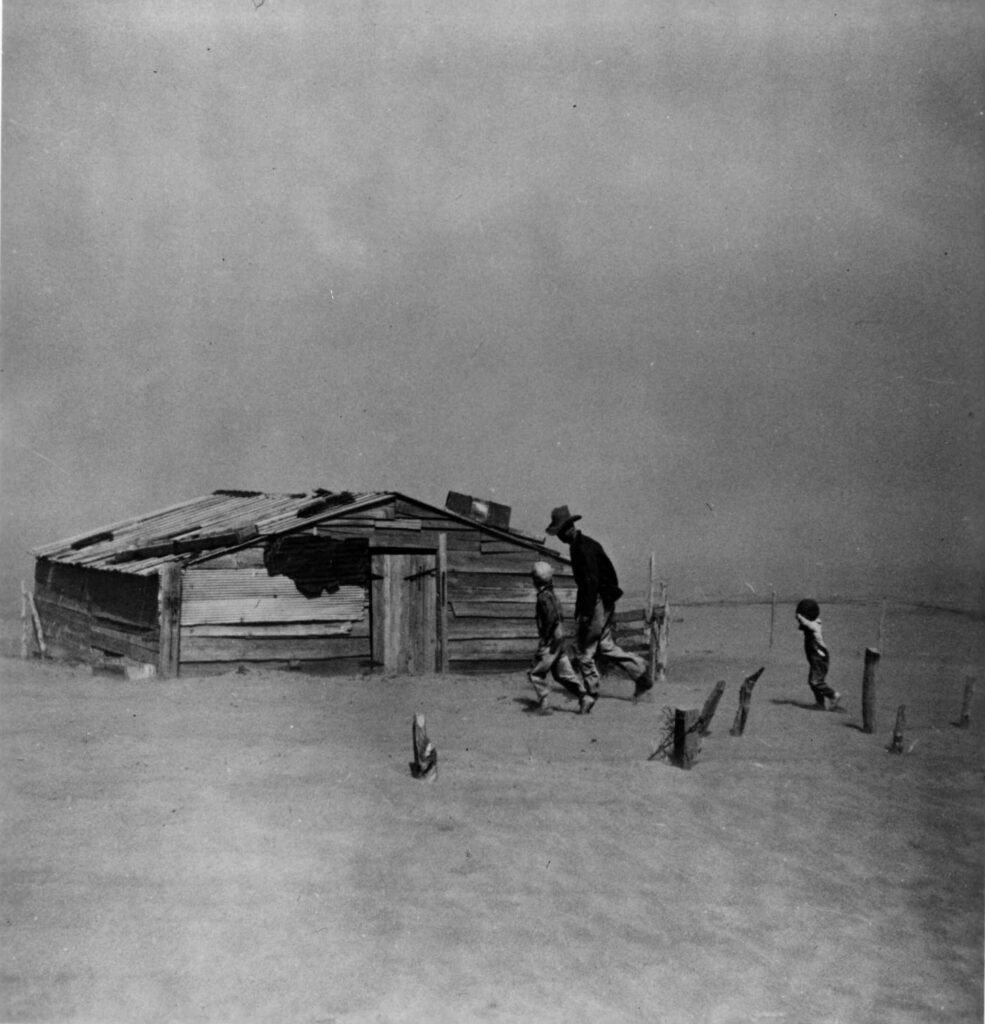
(Photographic images are from the US Department of Agriculture archives)
This is where I leave you. If you’re familiar with American history or John Steinbeck’s The Grapes of Wrath, you know the discrimination and abject poverty people faced who tried to escape the Great Plains for the greener pastures of California. The land was not one of milk and honey for most of them. It didn’t matter what part of the Great Plains you were from, all were considered dirty Okies who were treated less than human for interloping on the resources of the locals, sullying the schools and depleting resources and became more or less indentured servants if they managed to find work. Decent jobs were unavailable – nobody would hire them except to seasonally pick crops. People lived in their tents or in their cars if they were lucky, or in communities put together by unscrupulous growers to house them, continually in debt from high rent and company store prices.
Elsa and Lareda have to redefine their relationship throughout these California years, working both together and oppositional for what they feel is the right direction for the family. The mother/daughter relationship is tested, as many are, but they also learn to appreciate their differences and respect the choices each makes. Elsa never quite sees herself as brave, but digging in and doing what needs to be done everyday to feed and protect her family is the quiet bravado that so often we don’t recognize in ourselves. There’s a lot that takes place once they reach California, much of it is pretty grim but there are also moments of grace and love.
The Four Winds is also an immigrant story. The Martinellis are immigrants trying to hold on to the land and the idea of being American that they worked so hard for; the Mexican immigrants in California have been deported and the Californians would much prefer them to the influx of Okies; Elsa and her family and the millions like her are basically immigrants within their own country, trying desperately just to survive and rebuild their lives from precarious circumstances back home. Before Elsa leaves Lonesome Tree, there’s a scene where she is driving through town and looking at all of the abandoned homes and businesses. She notes that neighbors she knew had followed family to California in the hopes of jobs. “Last she heard, Tom and Lorri had followed their kin to California on foot. On foot. How could anyone be that desperate?” If you read this book and don’t come away with a greater empathy for the plight of immigrants and a burning rage against the indignities humans inflict on each other, then you have lost your humanity.
There’s an interview with Kristin Hannah at the end of the audiobook of The Four Winds that’s really good if you want to take a listen. In it, Hannah talks about growing up in California and not really being aware of the Dust Bowl history from her days in school – it just wasn’t covered, so researching the era was eye-opening for her. Living in Oklahoma,however, it was ingrained in my family history. I knew I had extended family who had moved to California and Oregon but never thought about why. My grandparents were children during that time and, while I don’t remember them talking about it, there was always the mindset of making sure there was enough put by in the event of ‘hard times’ – enough vegetables growing in the garden, enough food preserved before winter, enough money in the bank. This was carried through even though we were not living off the land and I certainly didn’t grow up in hard times – my grandfather had a great retirement, my mother had plentiful work, I always had everything I needed or wanted, but the mindset never went away, nor did their love for fried bologna sandwiches or a pot of brown beans and cornbread – comfort food from when times were tough.
I really enjoyed The Four Winds. I didn’t have any expectations for it and almost put it aside in the first few pages when the innocent Elsa becomes pregnant – I thought I knew where that trope would end up, but I’m glad I persevered. I was really rooting for Elsa, even when I wanted to shake her and make her stand up for herself more. I also identified with Lareda, the fire and the passion that existed in her and how that played out against such a bleak backdrop. Lareda might be my favorite. Of course, the setting of the story during the Dust Bowl brought some perspective for me in regards to my own family history. That ending, though! Like many books, especially series where you might invest years of your life, you have an ending in mind for your favorite characters and when you and the author part ways on what that ending should be…well, it can be a hard pill to swallow. The ending was a surprise for me. From the interview with Hannah at the end of the audiobook, the ending seemed to be a surprise for many. I might debate Hannah on her story choices, but I will admit that I am not at all sorry I spent my time in this world and would do it all over again.
This is my first Kristin Hannah book and it won’t be my last. I’m thinking about The Nightingale next – what are your thoughts?
Suggested reading:
The Grapes of Wrath by John Steinbeck
Letters from the Dust Bowl by Caroline Henderson
The Worst Hard Time: The Untold Story of Those Who Survived the Great American Dust Bowl by Timothy Egan
Years of Dust: The Story of the Dust Bowl by Albert Marrin
An American Exodus: A Record of Human Erosion by Dorothea Lange and Paul Taylor
The Dust Bowl Through the Lens: How Photography Revealed and Helped Remedy a National Disaster by Martin W. Sandler
The Dust Bowl: An Illustrated History by Ken Burns and Dayton Duncan
Hoover: An Extraordinary Life in Extraordinary Times by Kenneth Whyte
FDR by Jean Edward Smith